OpenTable . Communications
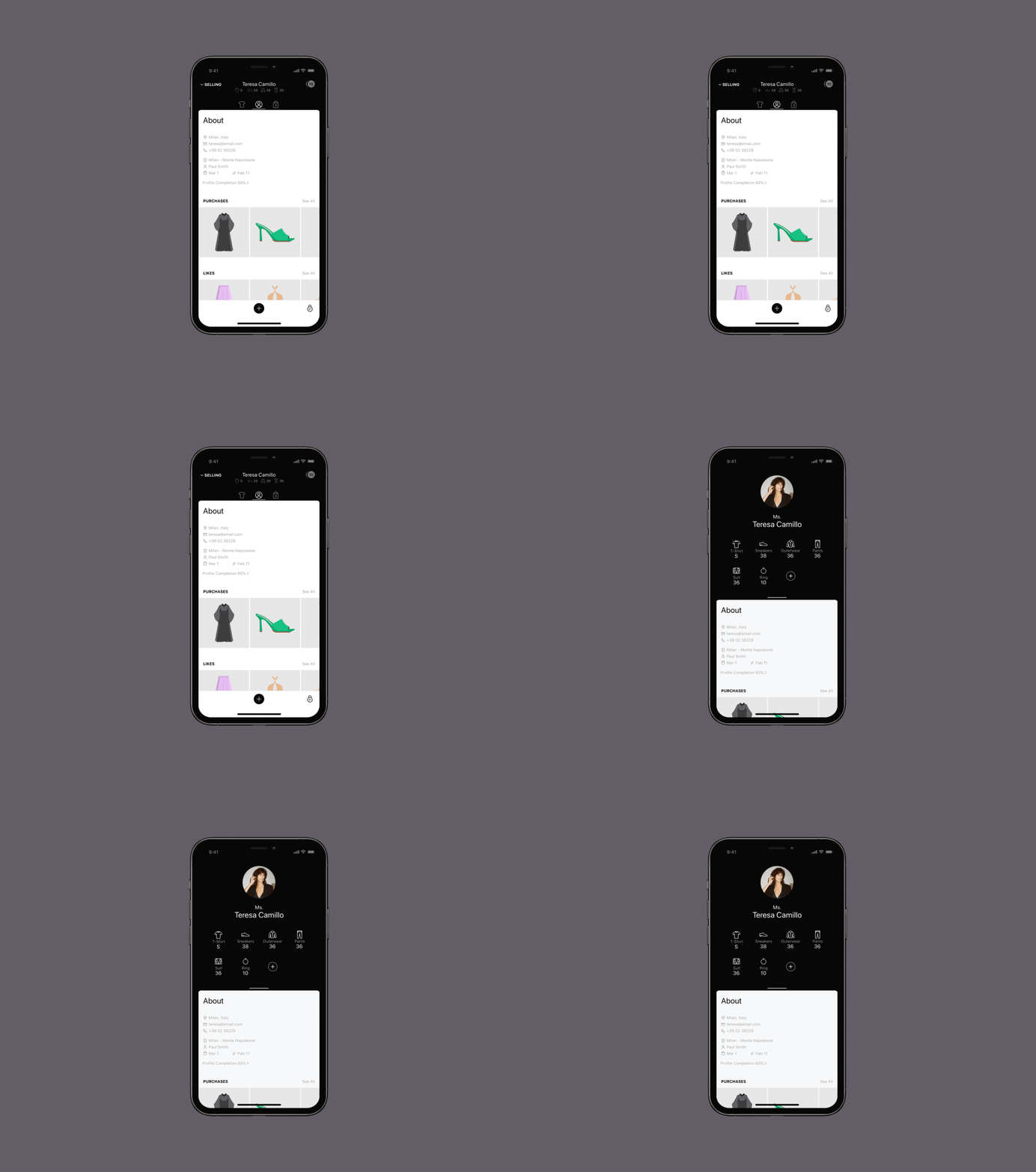
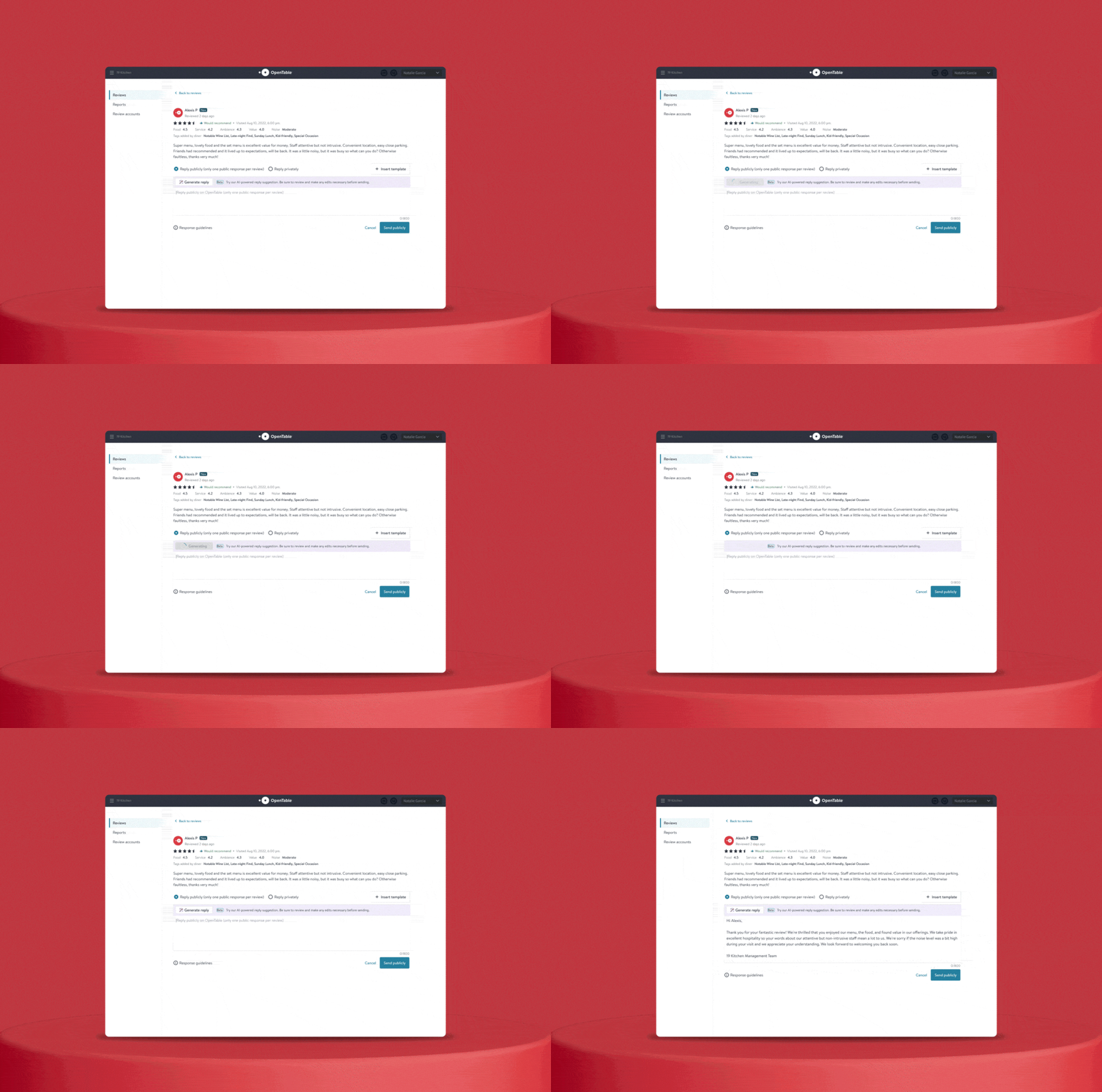
Led the design for a Communications Hub that enables restaurants to customize guest messaging across channels, strengthening brand voice and improving guest engagement
Team
1 designer
1 product manager
1 product marketing manager
10+ engineers
Impact
ARR grew $15K to $466K in 36 weeks
48% monthly growth
19% of restaurants customized reservation messages (vs 10% target)
Diners respond 40% faster to restaurants
My Role
Partnered with product and marketing to define the Communications vision and roadmap. Led research, concept development, and end-to-end product design while representing the needs of enterprise restaurant groups through user insights.
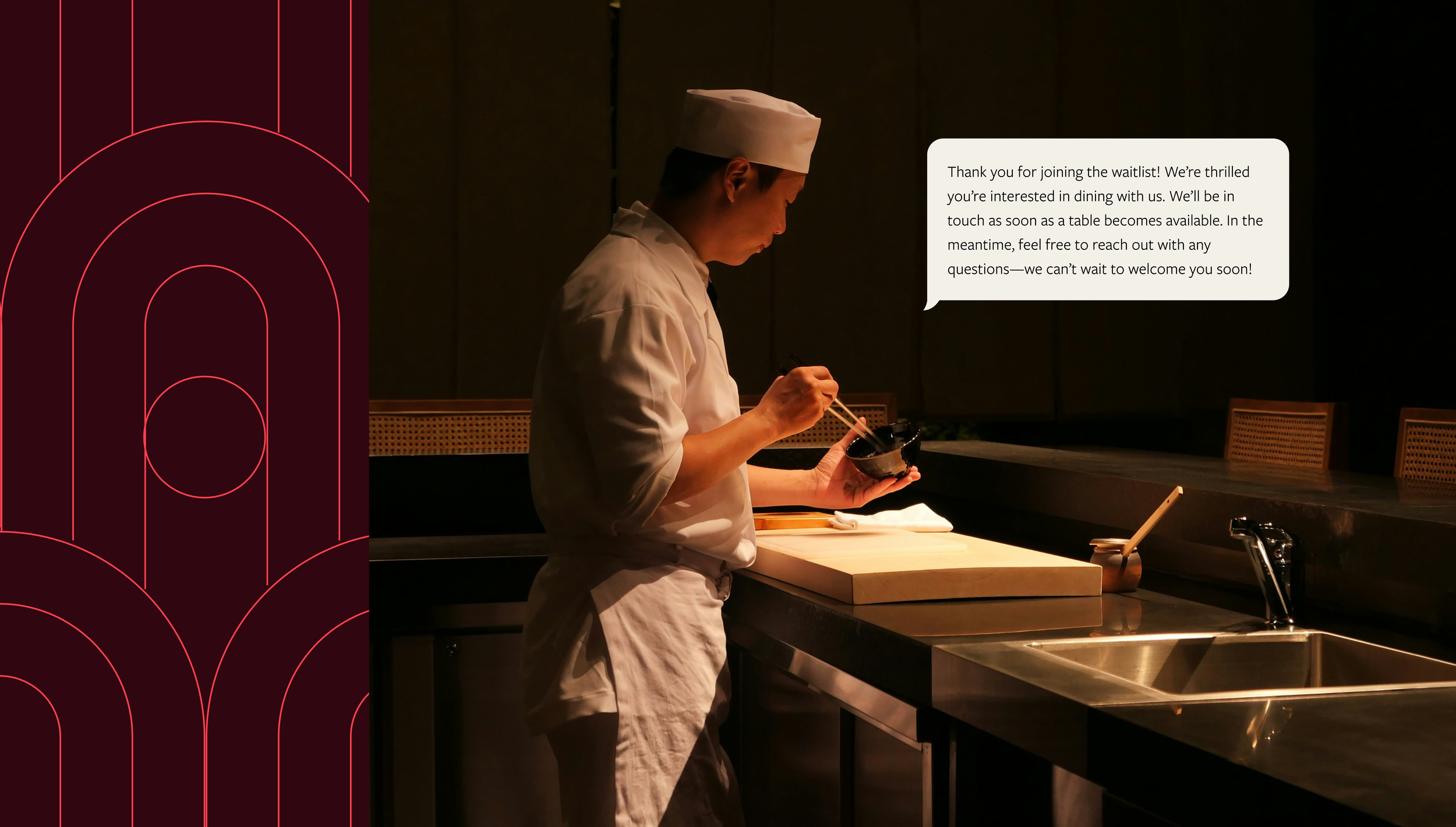
Guest communication plays a key role in shaping the hospitality experience — from confirming reservations to setting expectations before arrival. OpenTable’s messaging tools were fragmented across the platform, limiting restaurants’ flexibility to tailor communications to their brand voice and service style.
This posed an opportunity to design a tool that allows restaurants to deliver more personalized and brand-aligned guest interactions.
I partnered with my PM and PMM to define the long-term vision for OpenTable communications. To shape the roadmap, we conducted a competitor SWOT, synthesized two years of restaurant feedback and mapped the end-to-end communications journey
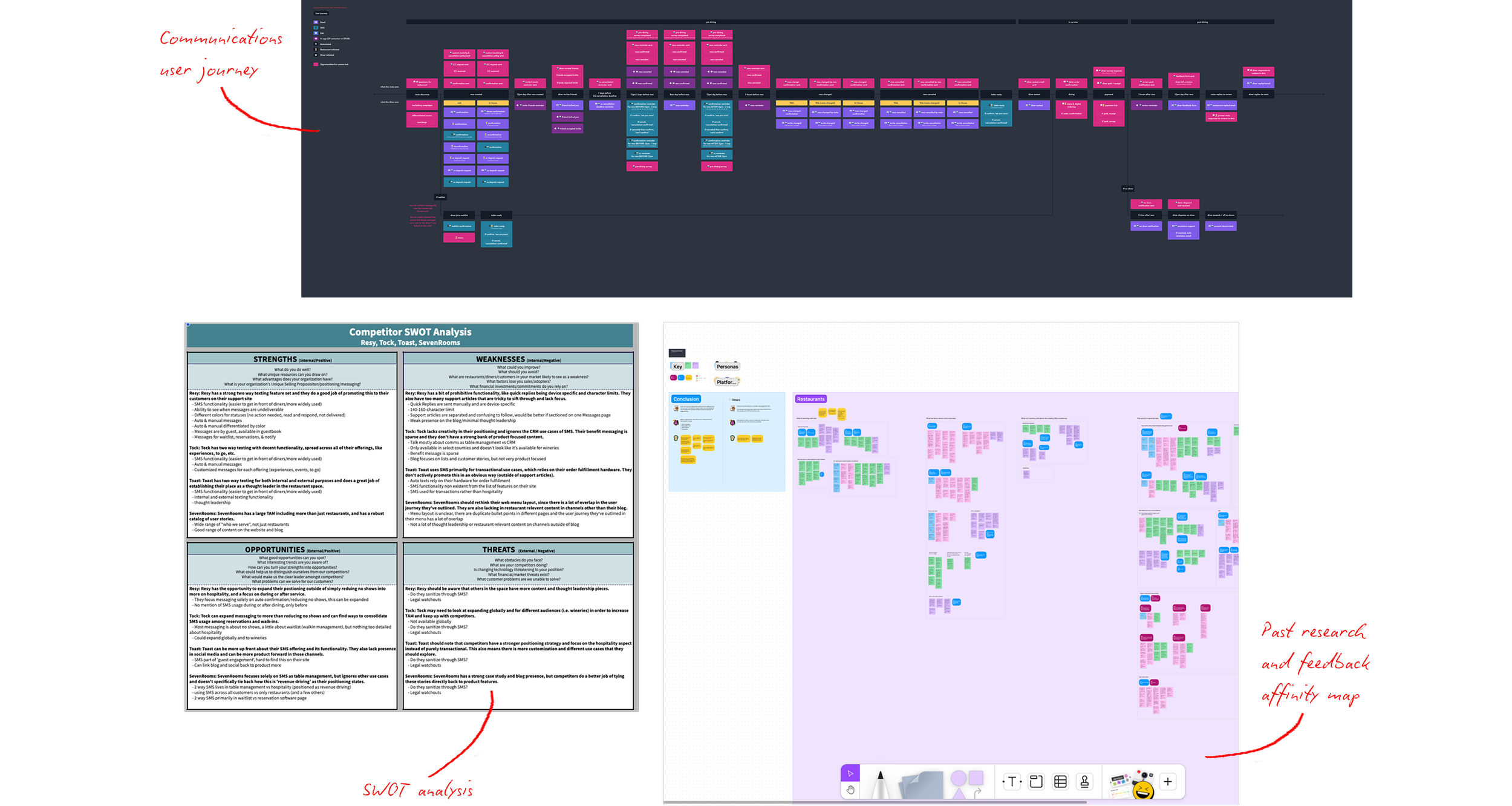
Our research revealed key pain points for restaurants. They want messages that flow and reflect their brand while giving them control over timing and recipients, but communications are scattered across the platform, making it hard to get a complete view and optimize interactions. Restaurants also worry that messages, including OpenTable’s automated ones, don’t reach diners quickly, and labor shortages make timely responses difficult.
We shared our vision with account managers and 5 enterprise restaurant groups, and identified transactional message customization as the top priority.
What are Transactional Communications?
Transactional communications are messages and emails that OpenTable sends on restaurants’ behalf to guests that help restaurants plan for service and ensure diners receive essential information regarding their reservation.
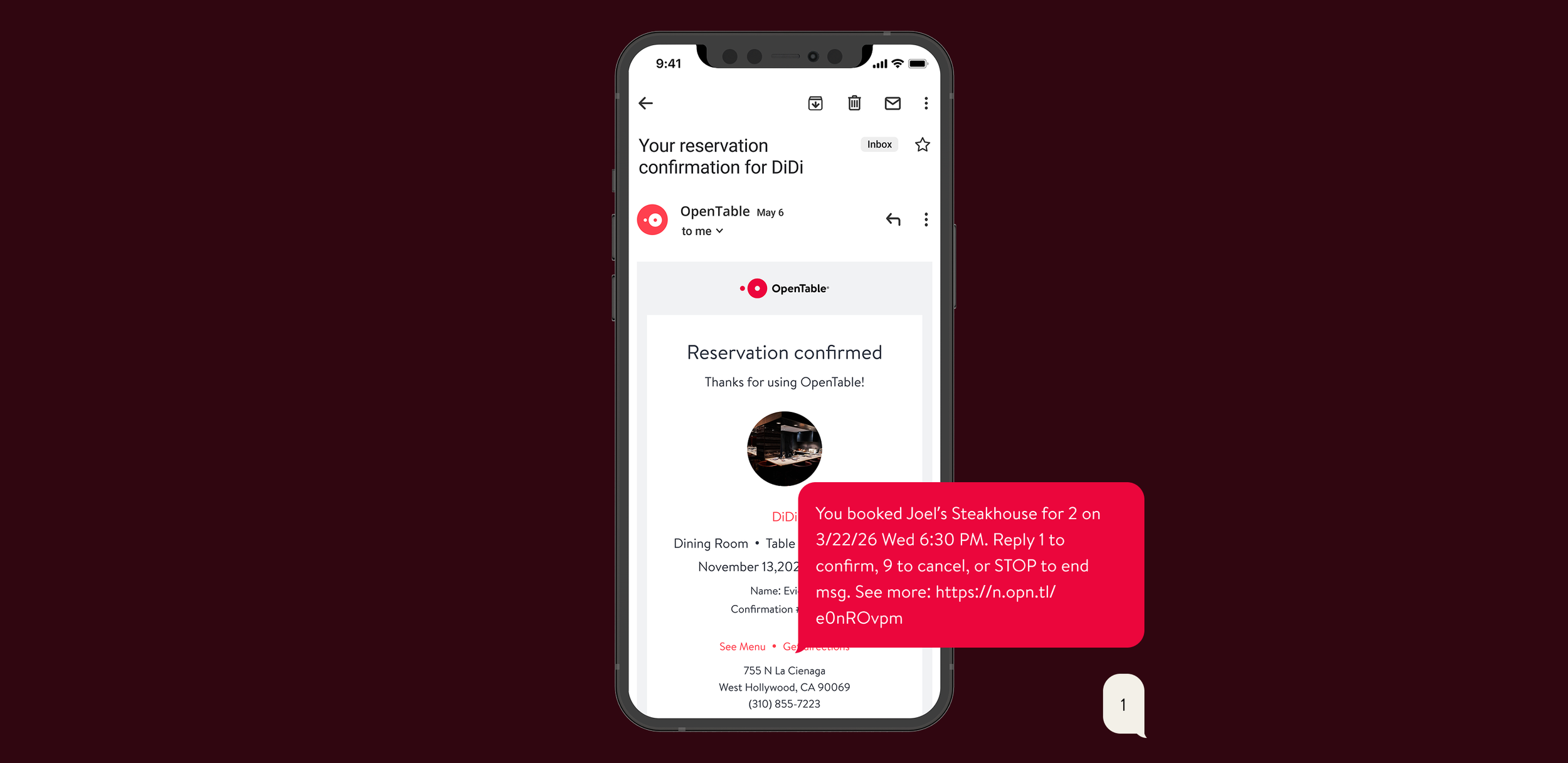
We started by researching which transactional messages restaurants most wanted to customize.
Methodology
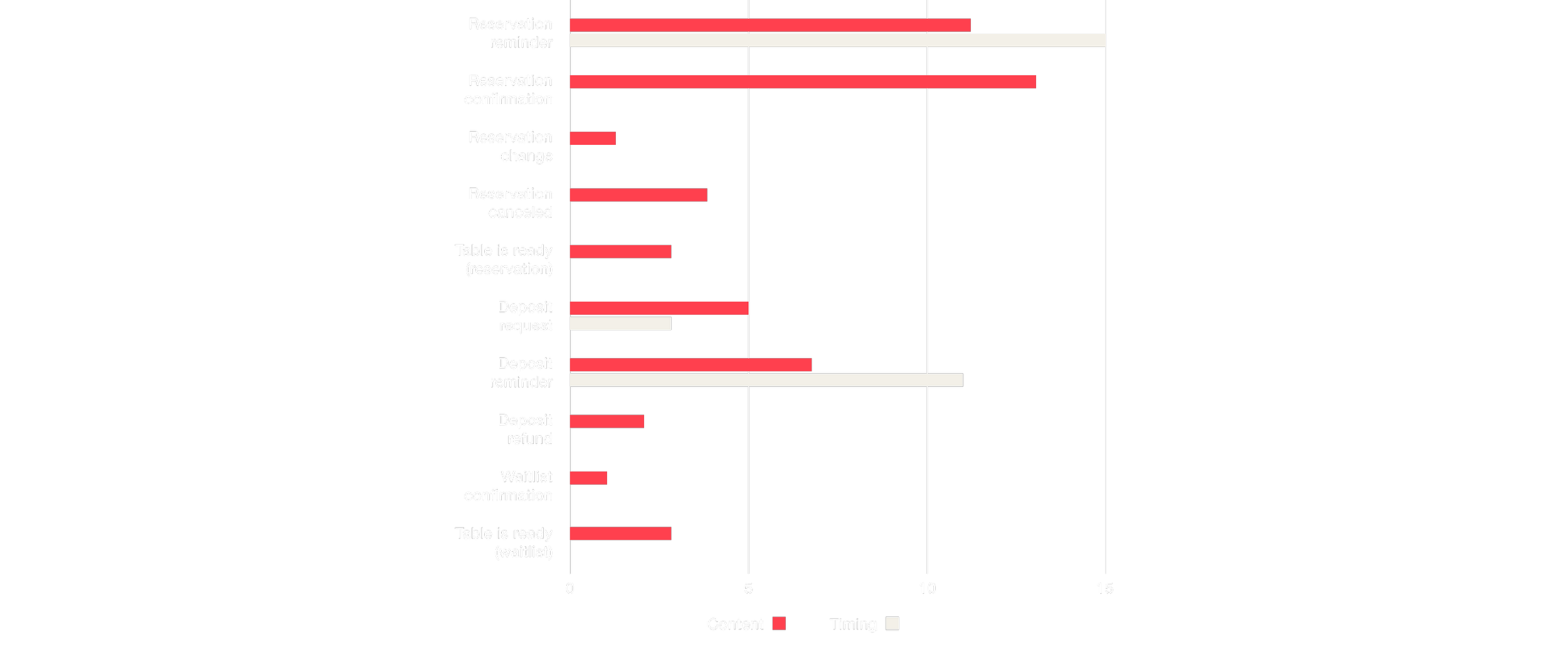
Restaurant survey - Survey sent to 20 restaurants asking them to select the types of communications they’d like to customize

Prioritization exercise - 45 min meeting with 10 account managers who completed a prioritization exercise around the importance of customizing OT’s various transactional messages

Based on the priorization exercise, we found that restaurants most want to customize their reservation reminder and confirmation messages.
For the MVP, we decided to focus on building the foundation for the new Communications Hub by enabling restaurants to customize the content and timing of reservation confirmation and reminder SMS messages.
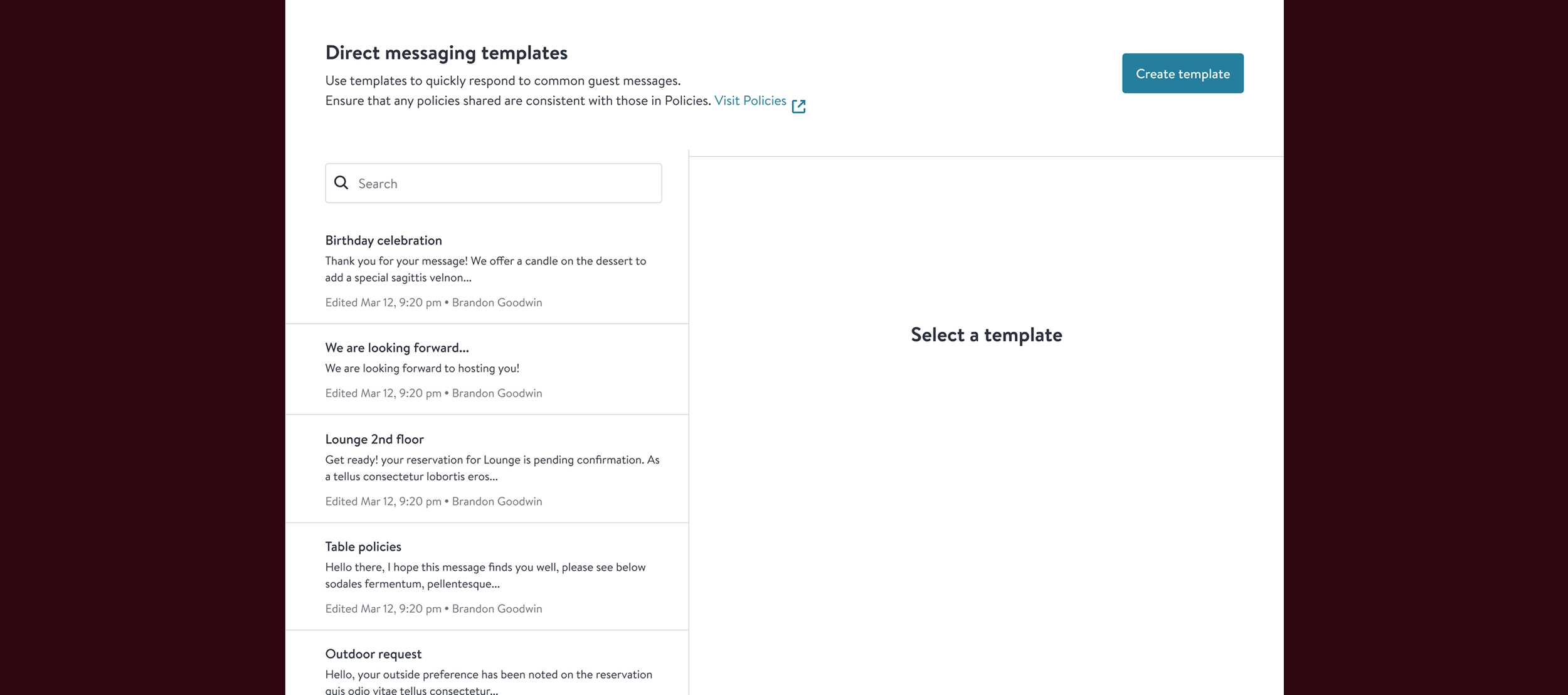
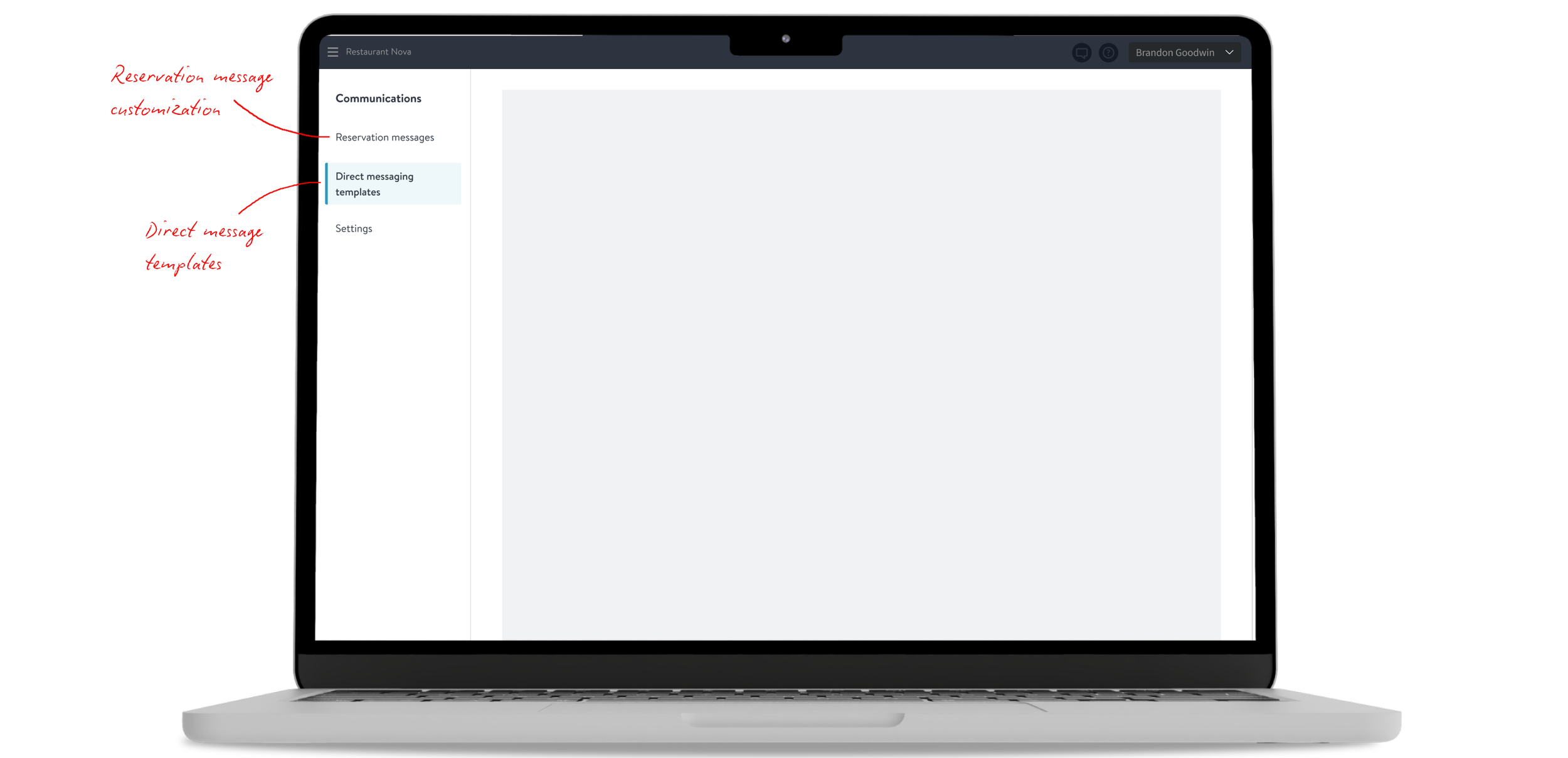
The template manager for OpenTable’s direct messaging tool, will also be moved into the Communications Hub.
Finally, since the Communications Hub centralizes all messaging, it makes sense to move message settings there as well, especially since other product areas already keep settings local.
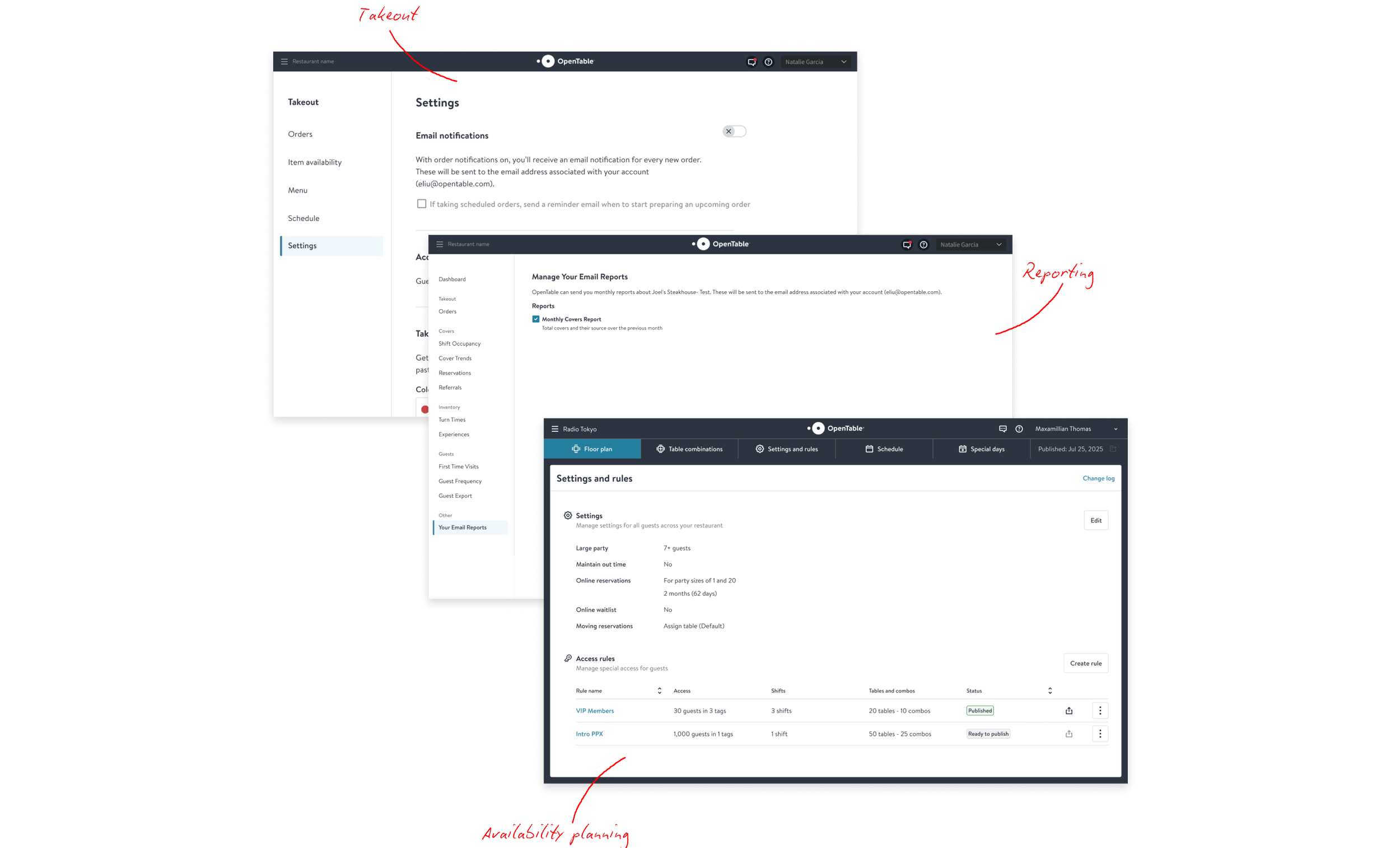
Furthermore, based on a cost–benefit analysis and stakeholder feedback, the Communications Hub will be offered as a Premium add-on.
Based on this framework, I explored high-level designs and used them to guide 45-minute interviews with seven restaurants. From these conversations, we learned:
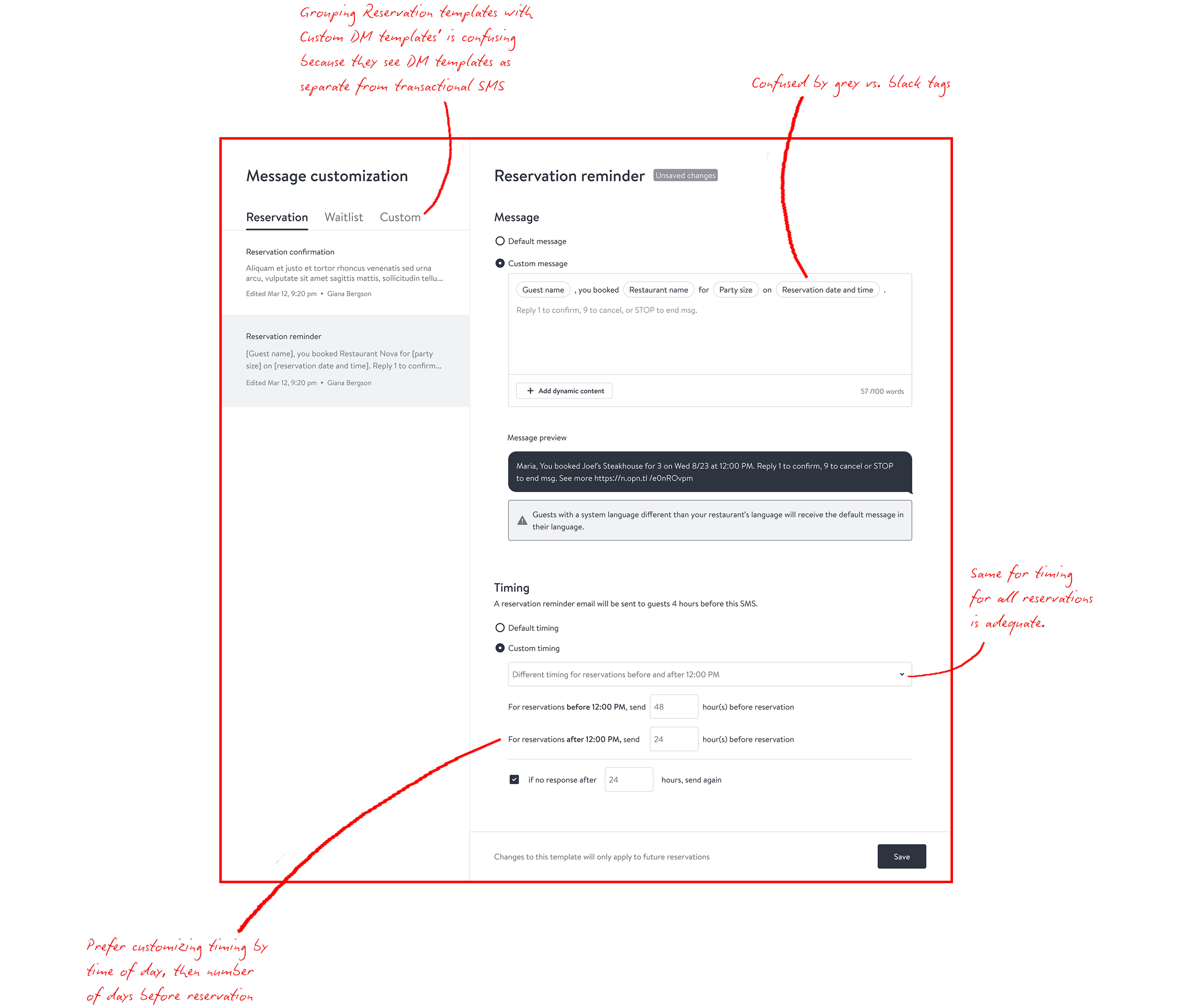
Based on our research findings, I decided to separate SMS reservation message customization into its own page, distinct from direct messaging templates.
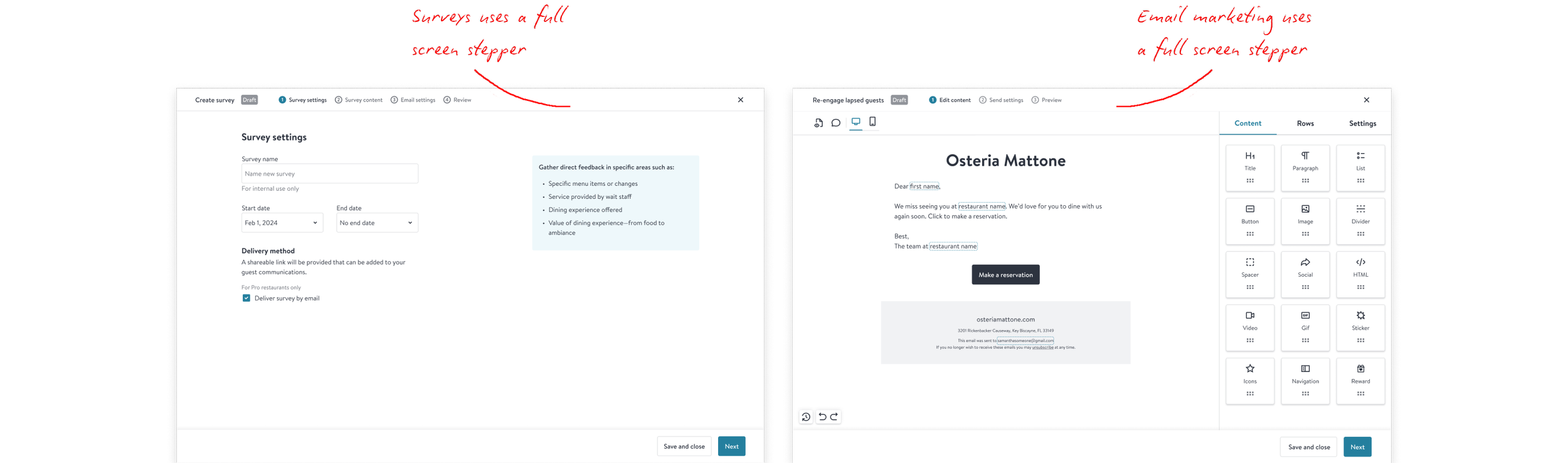
Many transactional SMS messages have corresponding emails, which we plan to support in the future. To ensure scalability and consistency with other customization features, I chose to pivot to a full-screen stepper modal.
Ultimately, this was the final solution:
36 weeks after launch, the project delivered strong results across both revenue and user behavior: ARR grew by $15K to $466K, with 48% month-over-month growth. Adoption exceeded expectations, with 19% of restaurants customizing reservation messages (vs. a 10% target), and diners responding 40% faster.
Explore more projects