5
Hospitality product teams sharing one reuse process
I drove a cross-team effort to improve how OpenTable’s 5 Hospitality product areas collaborated on reusable design and engineering solutions. Recognizing that teams were independently solving similar problems, I partnered with a lead engineer to establish a shared process for identifying opportunities for reuse, aligning on patterns, and bringing design and engineering together around common solutions.
I introduced and refined the process through ongoing feedback from designers and engineers, then shared the approach with other lines of business, which went on to establish their own reuse processes. This helped reduce duplicated effort and create a more consistent product experience across Hospitality while influencing how other lines of business approached cross-functional collaboration.
5
Hospitality product teams sharing one reuse process
32
reusable components and patterns aligned across teams in 9 months
13
snackbar types aligned across teams in under 24 hours
OpenTable is a dual-sided platform with four lines of business: Table Management, Commerce, Hospitality, and the Diner Platform. As the lead designer for Hospitality, I partnered with a lead engineer to fix a recurring issue. Teams were designing the same things separately, especially across lines of business.
We wanted a Hospitality-wide process to spot overlaps early, so reusable components could speed up development and keep the experience consistent.
1
Identify and align as designers
Designers meet monthly to identify reusable components and patterns. When something appears in 3 or more projects, we collaborate on a scalable solution.
2
Share and collaborate cross-functionally
New reusable components and patterns are shared with engineers and design systems to validate their potential for reuse.
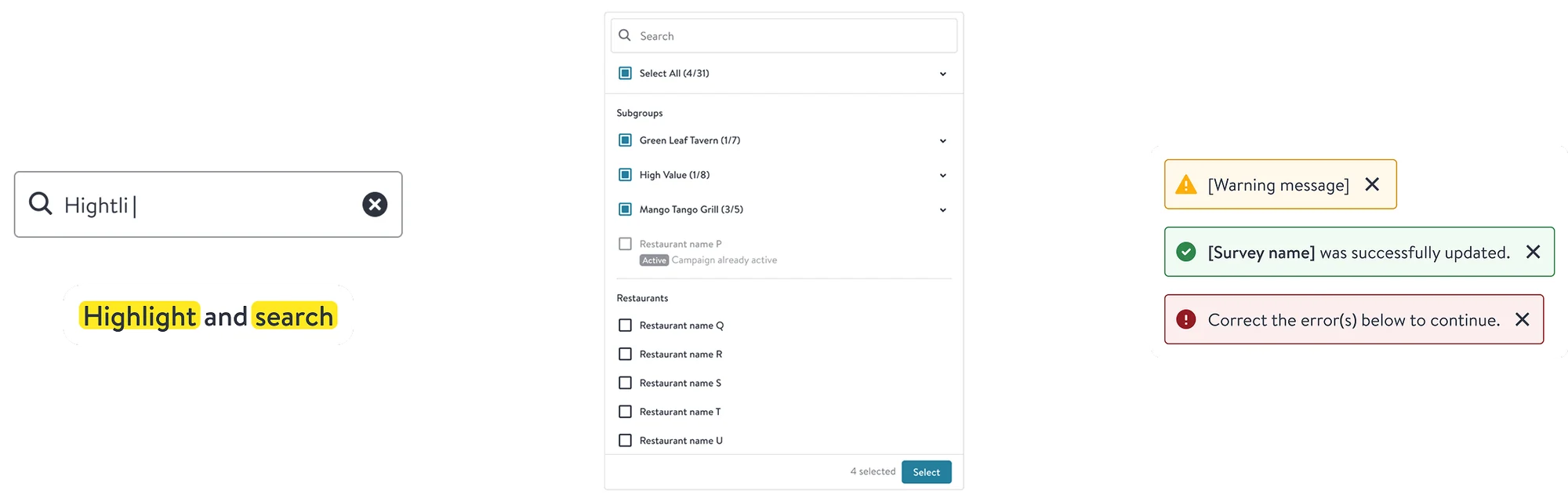
Three notable components came out of the process: search and highlight, the restaurant selector, and alert messages.
Swipe to see the full image →
Search and highlight
Designers found search and highlight in autotags, guest book, reviews, and the restaurant selector. Each version used a different highlight color, corner radius, padding, and search pattern.
Swipe to see the full image →
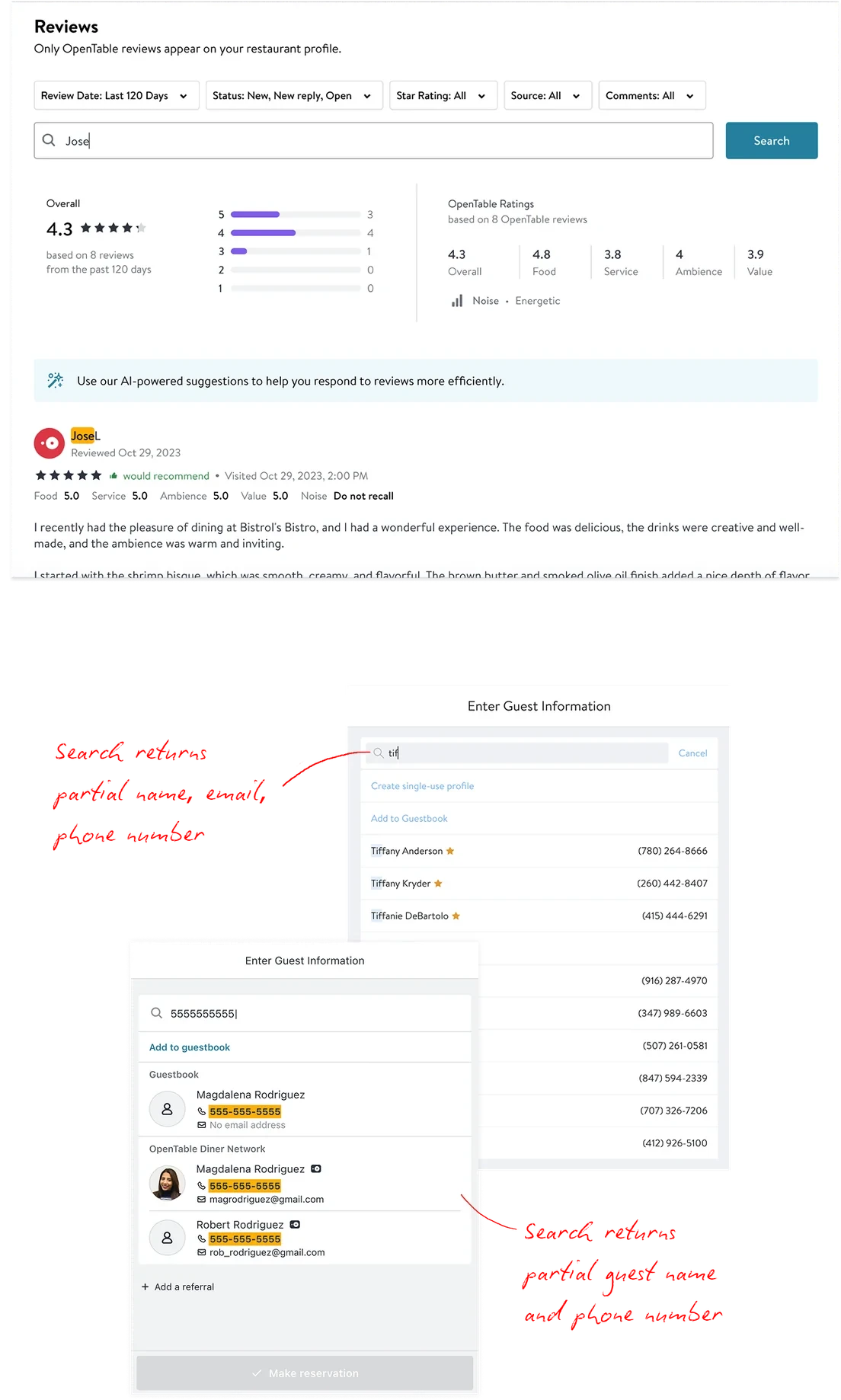
Swipe to see the full image →
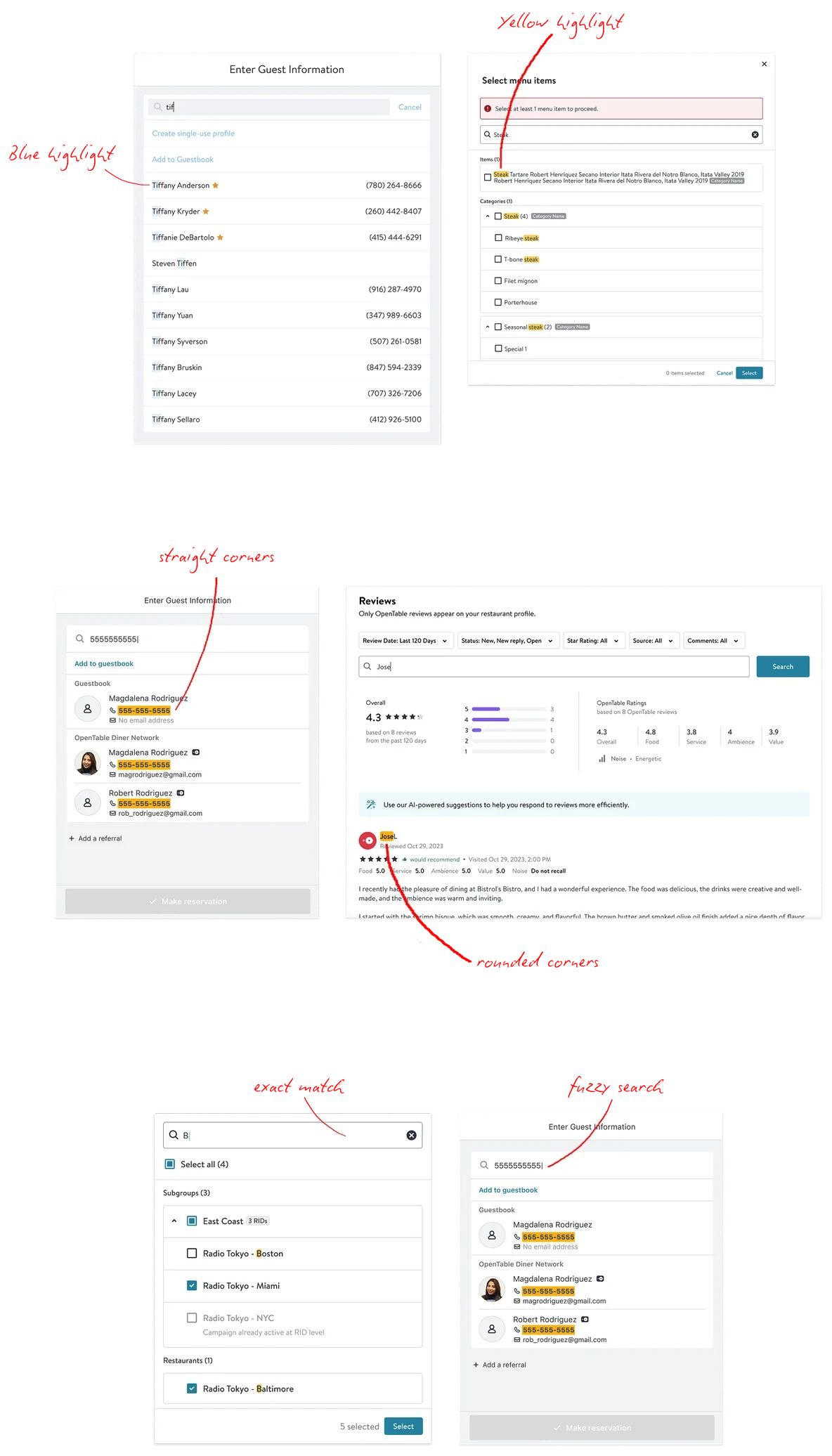
Swipe to see the full image →
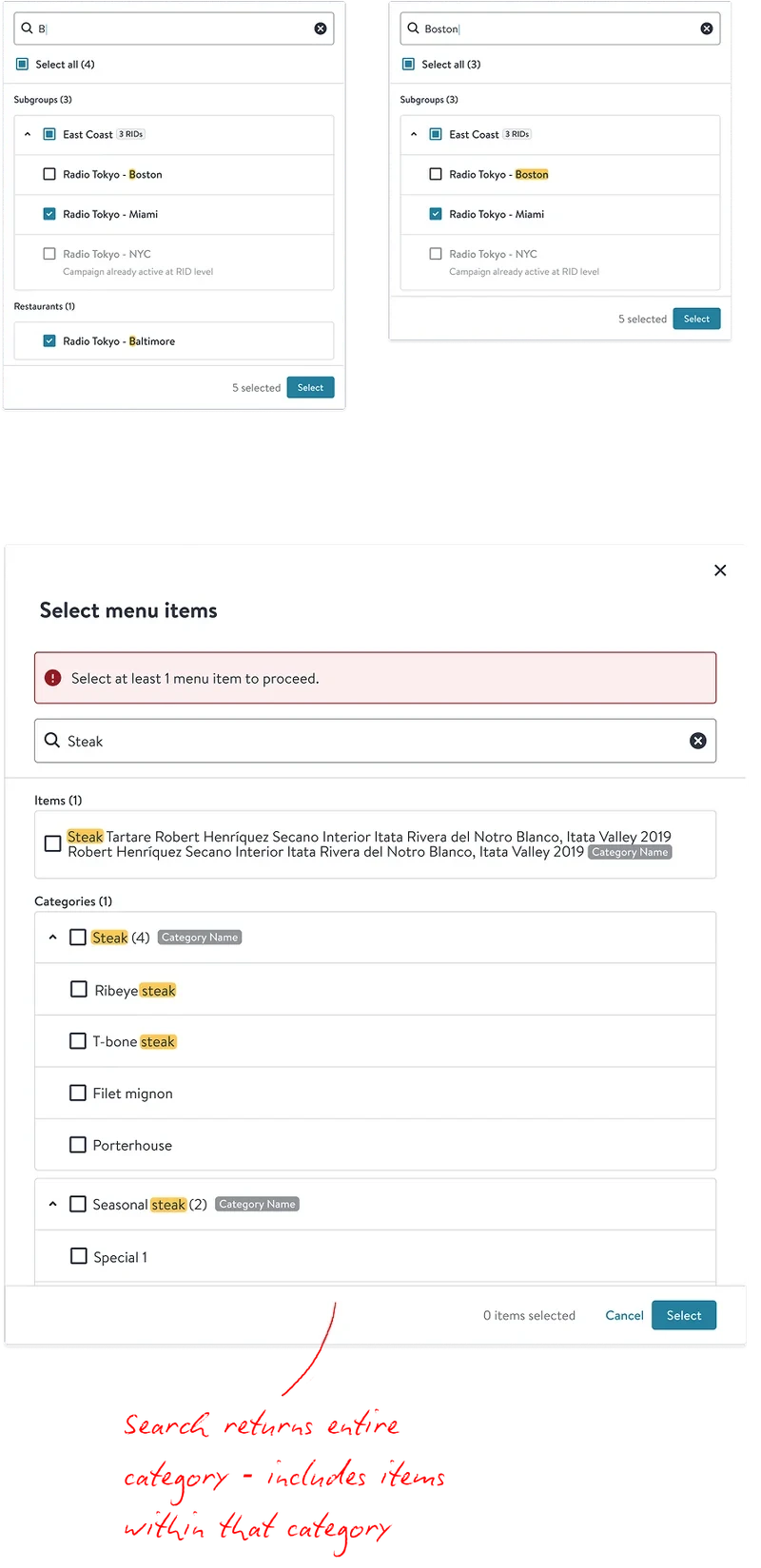
We reviewed the component with engineering and design systems to align on its reusability, then partnered with them to document it and find a team to build it.
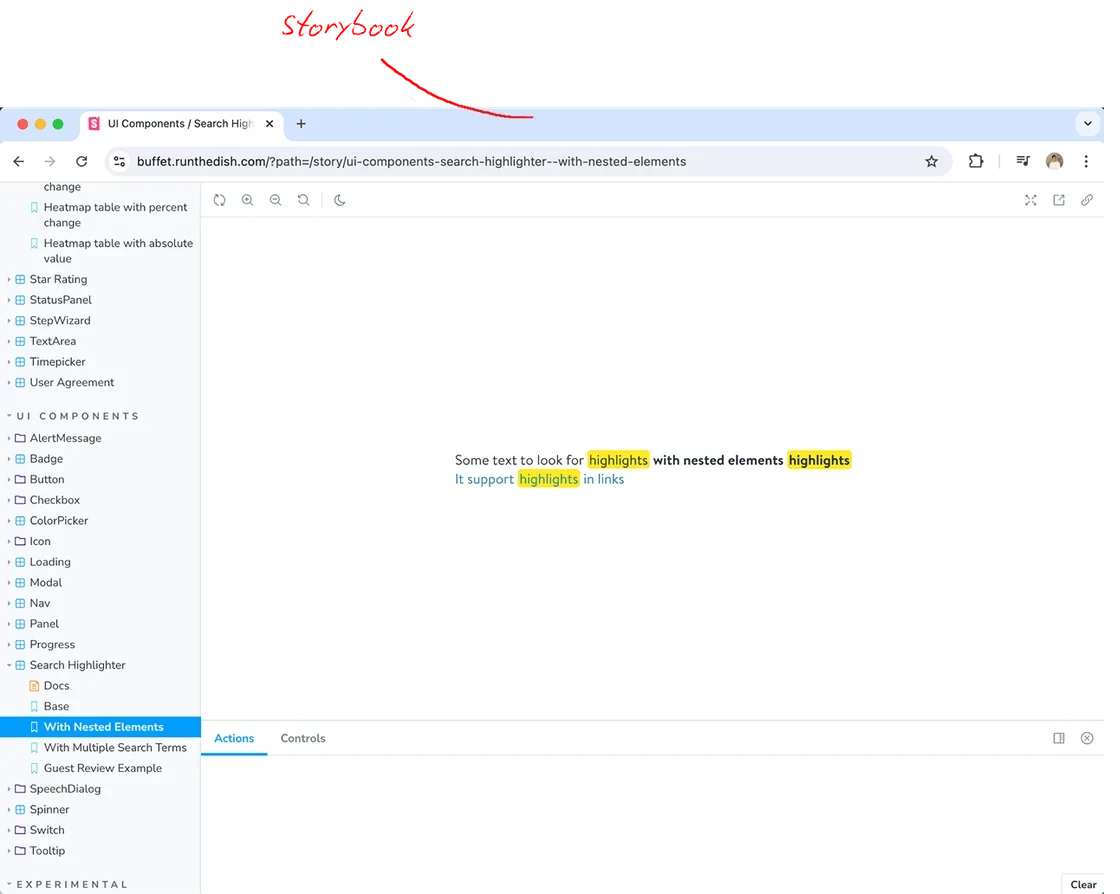
Swipe to see the full image →
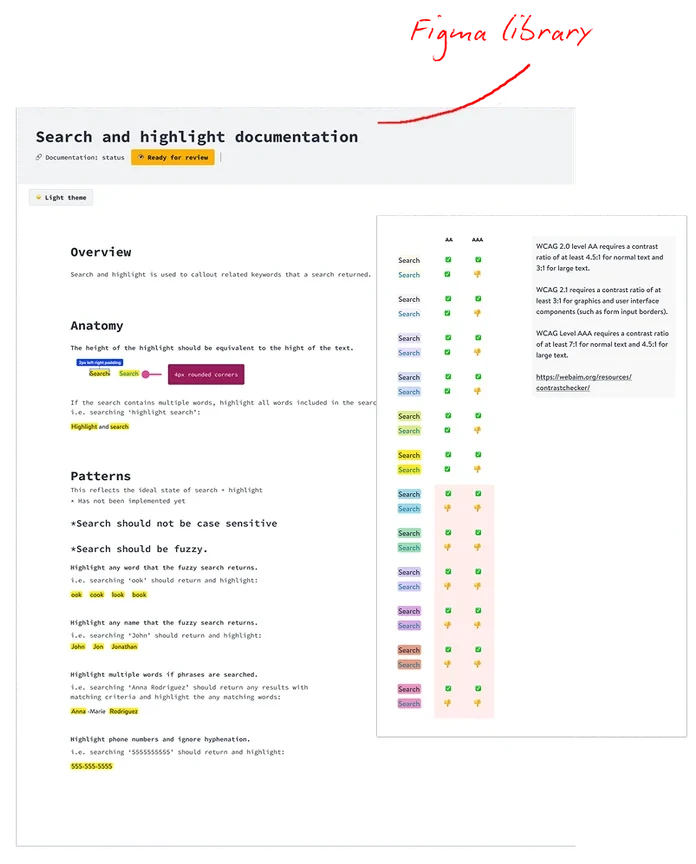
Swipe to see the full image →
Restaurant selector
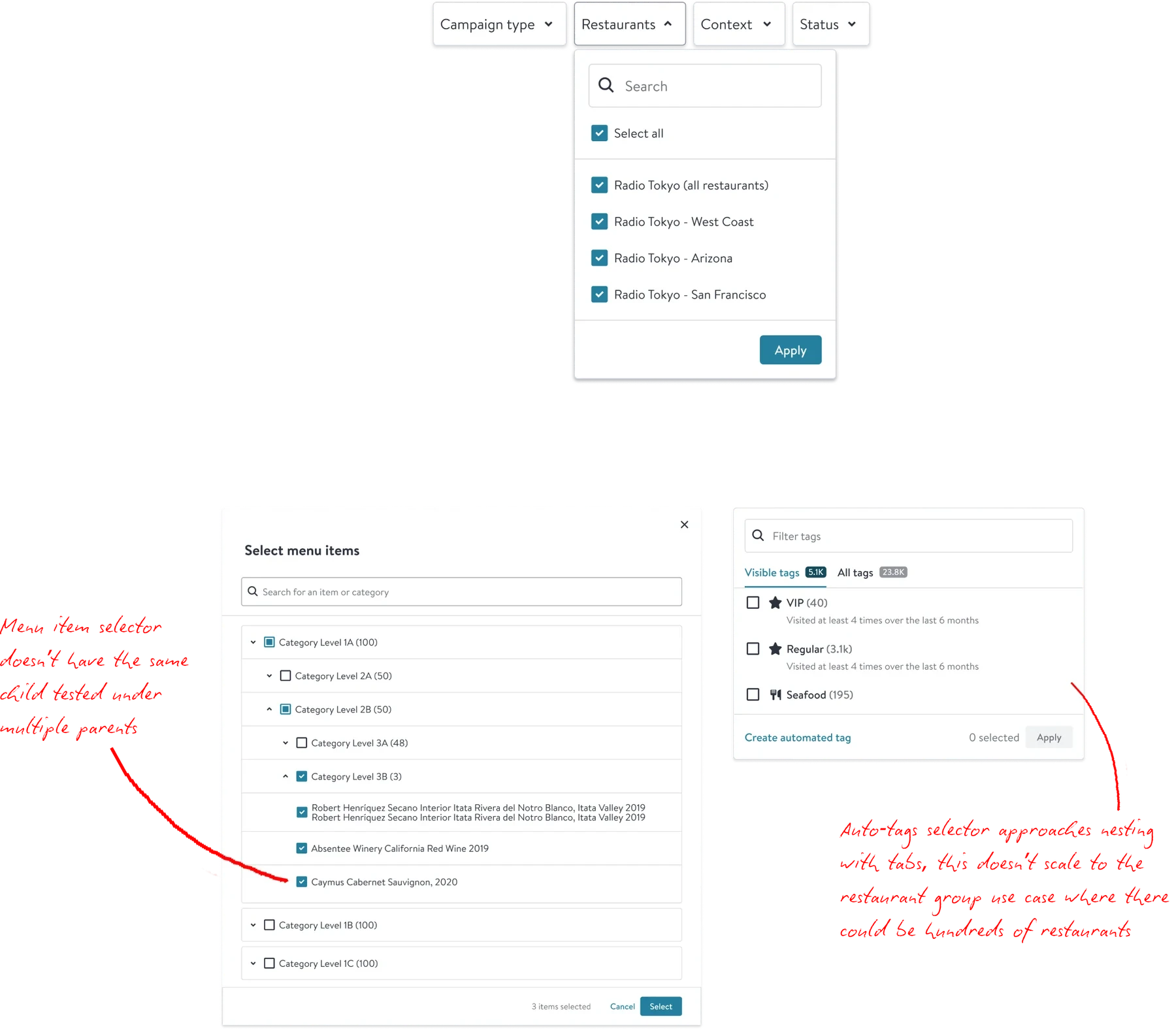
Email Campaigns for Groups needed a restaurant selector that could support enterprise groups with many subgroups and hundreds of restaurants, some nested several levels deep. In our monthly design meeting, the designer leading the project shared plans for a new selector that could build on patterns from existing ones.
Swipe to see the full image →
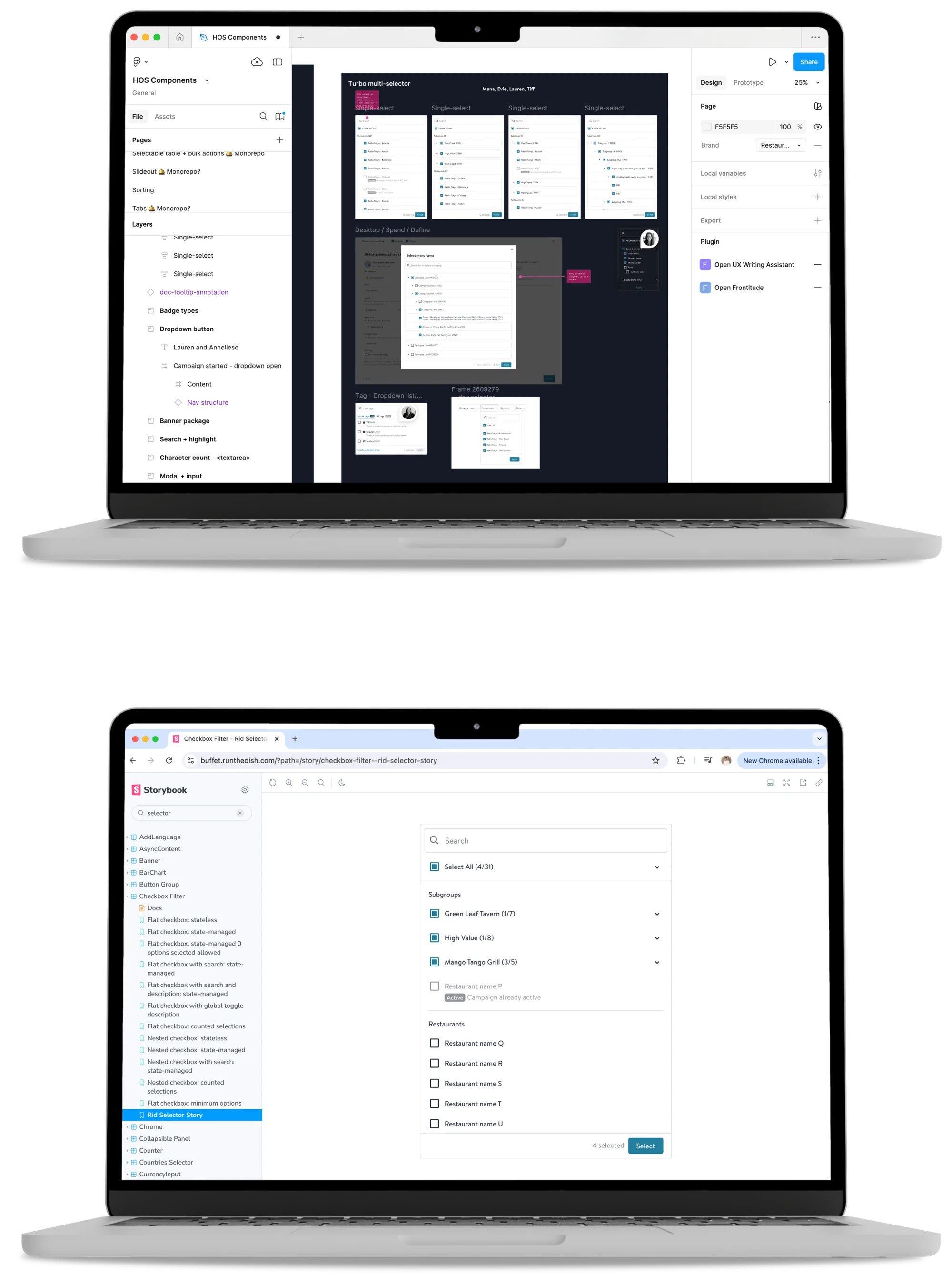
Other designers realized their upcoming group features could use it too. We consolidated existing and in-progress dropdowns into one universal selector and partnered with engineering and design systems to prioritize it.
Engineering built it within the Email Campaigns for Groups project, which saved time across Hospitality and let OpenTable’s other lines of business adopt it.
Swipe to see the full image →
Alert messages
Engineering found inconsistent snackbar copy and raised it in our component reuse Slack channel.
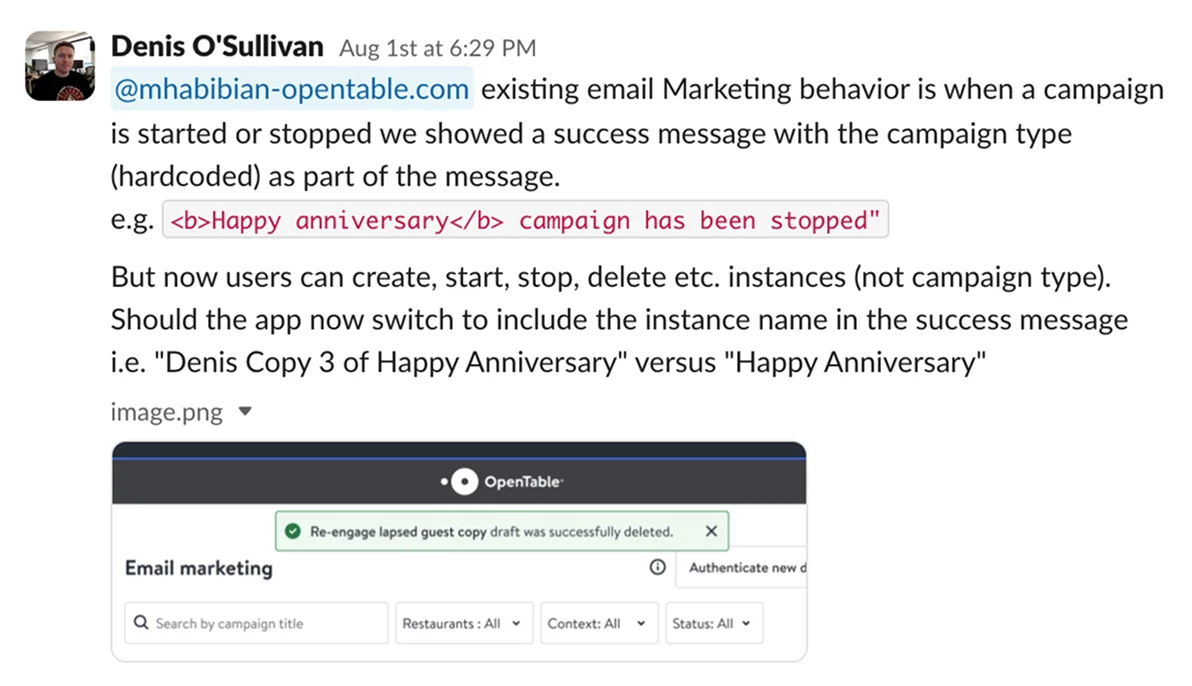
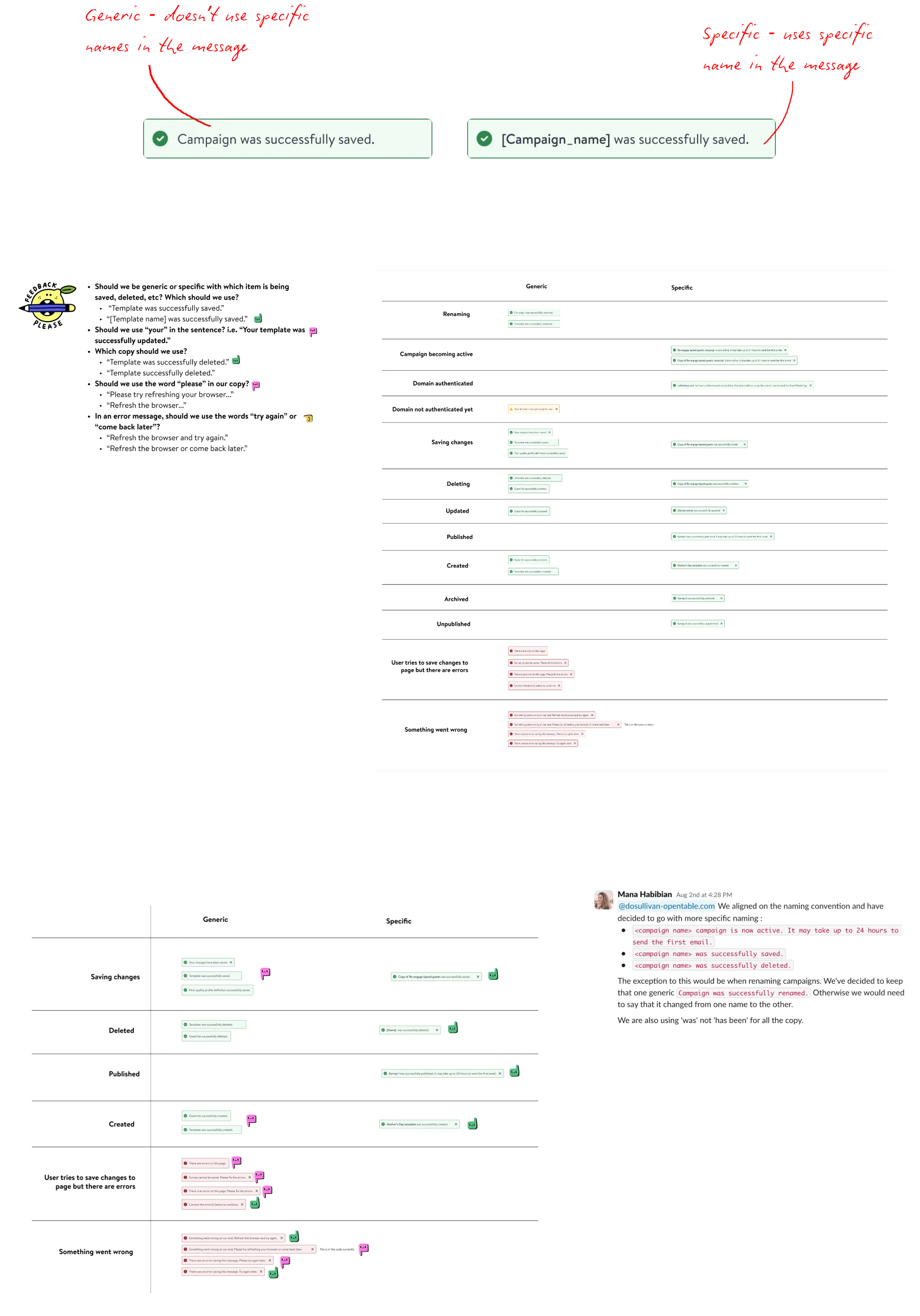
We sorted each instance as generic or specific, using Email Marketing’s high volume and varied use cases to find common patterns. After aligning with our design manager on the copy logic, we applied the framework to every alert and shared the guidance with the wider team.
We moved this fast because of the channels and relationships our component reuse rituals had built. They kept reusability top of mind for everyone.
Swipe to see the full image →
This alignment let teams prioritize shared components, making design and development more efficient and coordinated.
I shared the process with design leads from other lines of business. Next, I plan to help them set up similar component reuse processes and work with design system leads on a framework for consistency and reuse across all lines of business.